
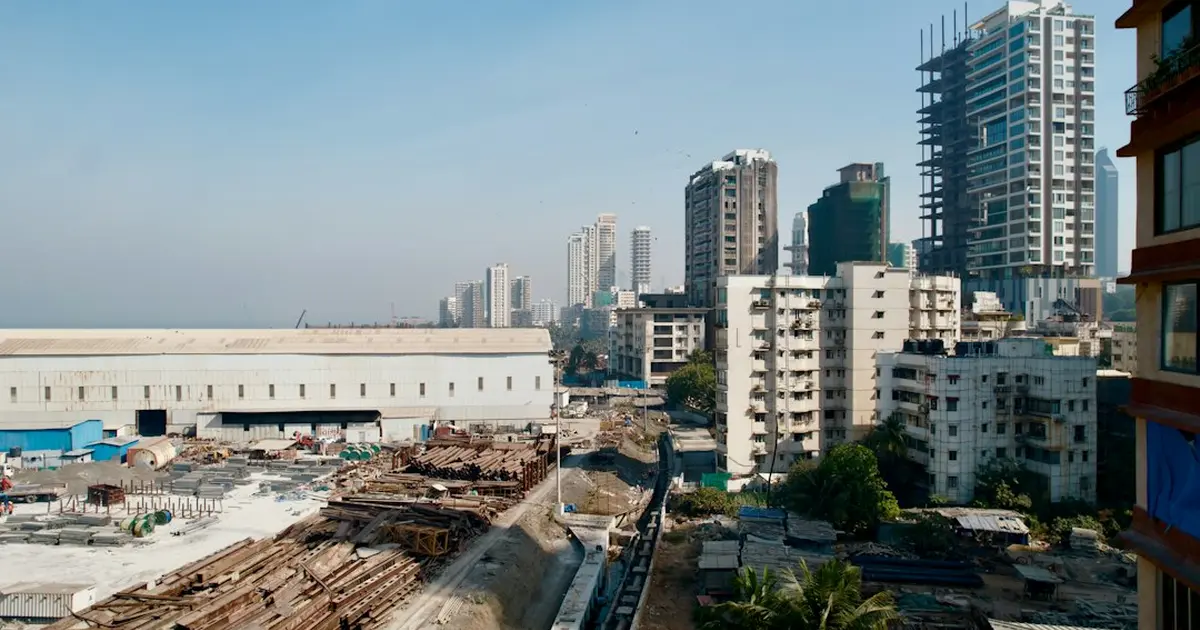
Tier-2 Cities Price Growth Outpaces Metros, Knight Frank-CII Report Finds
Tier-2 Cities Are Pulling Ahead on Prices, and Buyers Should Read the Numbers Closely
A market feature published on 24 November 2026 puts tier-2 cities at the centre of India's next property cycle. It draws on the Knight Frank and CII report "India's Next Real Estate Markets", which says tier-2 and tier-3 cities could make up 25 to 30 per cent of India's real estate market by 2047, an opportunity worth $1.4 to 1.7 trillion. Rohit Kishore, CEO of Hero Realty, is quoted on the developer's outlook for these cities, and the feature frames his view as part of a wider shift in where urban growth will come from.
The Story
The Knight Frank and CII report is dated September 2026 and identifies 11 emerging residential markets where prices are rising faster than in India's top eight cities. Between 2021 and 2026, prices in these 11 markets rose 63 per cent, against 42 per cent in the eight largest metros. Over a decade, residential prices across the selected emerging cities have compounded at 8 per cent a year, roughly twice the rate in the eight biggest metros.
The emerging list includes Bhopal, Bhubaneswar, Chandigarh Tricity, Goa, Indore, Jaipur, Kochi, Lucknow, Nagpur, Visakhapatnam and Coimbatore. The feature groups them by economic role. Coimbatore, Surat, Vadodara and Ludhiana are manufacturing centres, with demand for workforce housing and mid-income homes. Nagpur and Visakhapatnam are growing as logistics hubs. Indore, Kochi and Bhubaneswar draw demand from institutions and offices. Goa, Udaipur and Dehradun are led by tourism and lifestyle buying. The report also projects that cities outside the top eight metros will see population growth of 28.2 per cent, against 8.7 per cent for the metros.
The feature does not link these figures to any single Hero Realty project, location or launch. They describe the market as a whole, and that distinction matters for anyone reading them as a signal to buy.
What This Means If You're Buying
A decade of 8 per cent annual price growth is a strong record, but it is a record of past performance. The report itself says its outlook is conditional and not a straight-line forecast. Knight Frank also warns that infrastructure alone cannot sustain demand. Jobs, household incomes, reliable power and water, and actual sales volume all have to keep pace. A city can show fast price growth for a few years and then slow sharply if local employment stalls.
For end-users, the practical question is whether a city has a job base that will keep people renting and buying after the first wave of interest passes. For investors, the report points to long-term capital growth and rental income from local demand, not from speculation. In the conservative case the report describes, homes and warehousing decentralise while offices, retail and institutional capital stay in the metros. In the stronger case, public spending draws private money in and city governments expand their capacity to absorb growth. Buyers should check which of these two paths a specific city is on before paying a premium for its growth story.
Synergy Infracon's Take
Our sales team reads this report as useful evidence that the next wave of housing demand is spreading beyond the top eight metros. We agree with the direction and with the caution. Where we differ from the enthusiasm in parts of the market is on timing. Tier-2 price gains often arrive in bursts tied to a single employer or highway, and buyers who enter at the top of a burst can wait years to break even. The best-performing tier-2 locations we track usually have three things in place before prices move: a working job base, a road or rail link that cuts commute times, and enough completed housing to keep prices steady when new supply comes in. Mohali's Sector 88 is a useful local example. It sits close to the ISB and Chandigarh IT Park, is about 5 km from Fortis Hospital and about 1 km from the Judicial Court Complex, and has an established residential base that Hero Realty has been building on since its earlier Phase 1 and Phase 2 in the sector.
What We'd Advise Right Now
- Treat the 8 per cent figure as a market average, not a promise for any one flat or plot. Ask any developer for completed-project price history in the same micro-market before deciding.
- Compare the city's job base and infrastructure timelines against the price you are being quoted. A metro-style rise without local employment is a warning sign.
- If you are buying for rent, work out rental yield at today's price before you commit. Lower yields can still work if capital growth is strong, but do the sums on paper first.
- Check the RERA registration number on the state portal for any project you shortlist, and confirm the carpet area and possession date in the agreement.
- Visit the locality at different times of day, and talk to residents of completed projects. Our sales team can arrange site visits and walk you through comparable projects before you decide.
Related Projects We Cover
- Hero Mohali Phase 3: the latest phase of Hero Homes in Sector 88, Mohali, with homes priced from Rs 3.15 crore as of November 2026.
- Prestige City Goa: a large township in Goa, one of the tourism-led markets named in the report.
- Mahindra World City Jaipur - Residential Plots: plotted housing in Jaipur, one of the report's emerging cities.
- Hero Homes The Canalis: another Hero Homes project from the developer's residential brand, useful for comparing its build quality across locations.
Hero Realty at a Glance
Hero Realty is the real estate arm of Hero Enterprise, founded in 2006. It has delivered more than 8.4 million sq ft of residential space and 200 acres of industrial parks. The company currently has five projects under development, with about 6.4 million sq ft of potential, and a further 8 million sq ft across those projects. In November 2025, HDFC Capital and Hero Realty set up a platform of Rs 1,000 crore to fund mid-income housing in tier-1 and tier-2 cities across North India. Its residential brand, Hero Homes, is expanding in the Tricity region and in parts of NCR, Punjab and Uttarakhand.
Frequently Asked Questions
Q: Which cities are in the Knight Frank and CII list of emerging markets?
The list includes Bhopal, Bhubaneswar, Chandigarh Tricity, Goa, Indore, Jaipur, Kochi, Lucknow, Nagpur, Visakhapatnam and Coimbatore. These are the 11 markets where residential prices have grown faster than in the top eight metros.
Q: How fast have prices risen in these emerging cities?
Residential prices in the selected emerging cities have compounded at about 8 per cent a year over a decade, roughly twice the rate in the eight largest metros. Between 2021 and 2026, prices in the 11 markets rose 63 per cent, against 42 per cent in the top eight.
Q: Does this report guarantee returns on a tier-2 property?
No. The report describes market performance and a conditional view of potential, not a guarantee. Knight Frank points to jobs, household incomes, utilities and actual sales as the factors that decide whether growth lasts.
Q: What should a buyer check before following this trend?
Look at the local job base, the timeline of road and rail projects, the developer's delivery record and the RERA registration of the specific project. Price growth in a city is a starting point, not a substitute for these checks.
Projects mentioned in this article
 New Launch
Hero Homes Sector 99 Phase 3 Mohali
by Hero Realty
Sector 99, Mohali
₹1.63 Cr - ₹2.36 Cr
2 BHK, 3 BHK
 Under Construction
Prestige City Goa
by Prestige Group
Sancoale, Goa
Price on Request
2 BHK, 3 BHK (per broker circulars)
 Upcoming
Mahindra World City Jaipur - Residential Plots
by Mahindra Lifespaces
Phase 1 (40 acres) launched · Balance of the planned 400-acre plotted layout to follow in future phases
Kalwara, Jaipur
₹60 Lakh - ₹3.2 Cr
Residential Plots (150 - 800 sq.yd)
 Under Construction
Developers mentioned

Hero Realty
Locations covered
Cities
Localities
Related News
 New Launch
Canalis Phase 3 in Ludhiana Is RERA-Listed: What Buyers Should Check
Hero Realty's 382-home Canalis Phase 3 in Birmi, Sidhwan Canal Road, is in Punjab RERA records. Here's what Ludhiana buyers should check before booking.
 News
Hero Realty Buys Fresh Land in Greater Noida's DMIC Township
Hero Realty adds a fresh parcel in Greater Noida's DMIC Township. Here is what the move means for buyers weighing 2, 3 and 4 BHK plans and the wider.
 New Launch
Leafsong Retreat Gets RERA Nod: What Sector 99 Mohali Buyers Should Check
Hero Realty's Leafsong Retreat is RERA registered in Sector 99 Mohali with 712 homes and August 2033 possession. Pricing, timeline and checks for buyers.
 New Launch
Hero Realty Launches Leafsong Retreat in Sector Mu, Greater Noida
Leafsong Retreat Gets UP RERA Registration: What Buyers Should Check Hero Realty’s Greater Noida residential project Leafsong Retreat is listed as a new...