
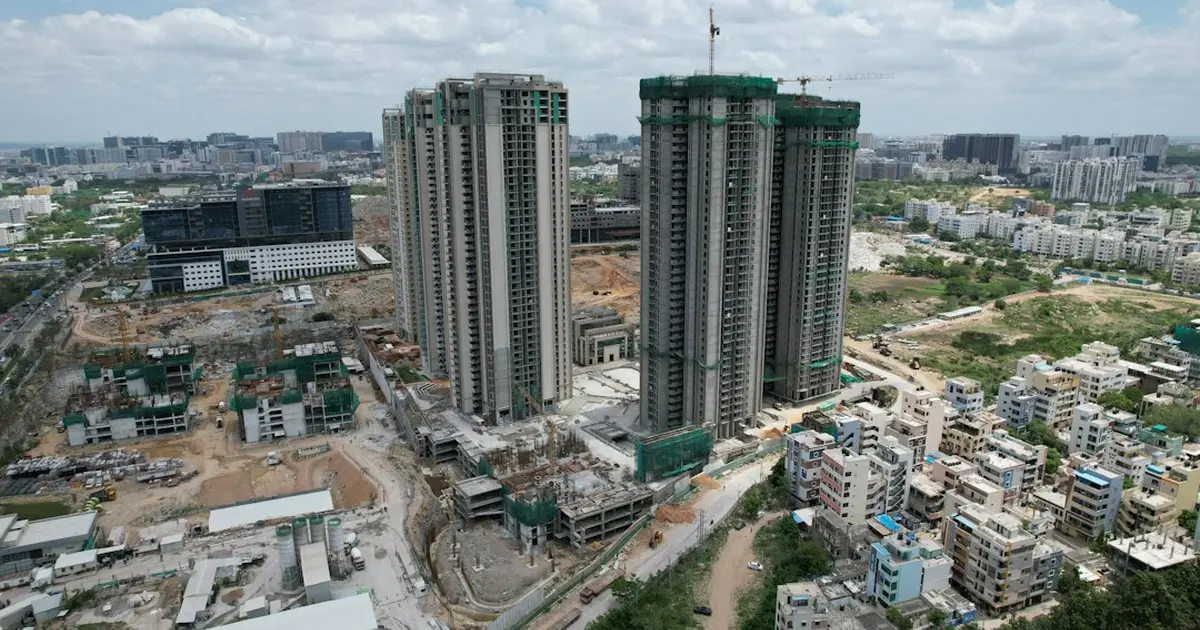
Thanisandra JDA Projects: Developer Alone Owes Buyers Delay Compensation
Supreme Court Keeps Delay Compensation With the Developer in JDA Flat Cases
On 20 February 2026 the Supreme Court of India dismissed appeals by flat buyers who wanted landowners held jointly and severally liable with the developer for delay compensation. The bench of Justice Pamidighantam Sri Narasimha and Justice Alok Aradhe, with the judgment written by Justice Aradhe, arose from a dispute over a Thanisandra project in north Bengaluru. The project, a 182-unit development of about three acres across four towers, was built by Unishire Homes LLP under a Joint Development Agreement (JDA) signed with the landowners on 24 February 2012. The site sits at Sy No 78, Tanisandra Village, behind Manyata Tech Park, PIN 560077.
Under the sale agreements, the developer promised possession within 36 months. That window closed on 24 August 2016, and the six-month grace period ran out on 24 February 2017. Buyers filed their complaint before the consumer commission on 18 August 2017. The National Consumer Disputes Redressal Commission later found deficiency in service, and the question of whether landowners shared that liability went up to the Supreme Court.
The Court held that where the obligation to construct and deliver flats rests entirely with the developer under a JDA, and the developer has indemnified the landowners against construction lapses, the landowners cannot be held liable for delay. The appellants had not alleged that any delay was caused by the landowners. They relied only on a principal-agent argument built on the power of attorney given to the developer, and the Court did not accept that a power of attorney alone made the landowners answerable for construction failures. The Court also said joint liability must be decided on the facts of each case. The landowners and the developer still have to transfer title and execute sale deeds in favour of the buyers, though the judgment set no date for that step.
What This Means If You're Buying
If you are buying into a JDA-structured project in Bengaluru, the ruling tells you where delay claims should be aimed. Compensation for late possession sits with the developer. The landowner's exposure is limited, provided the indemnity in the JDA is in place. For you, that means the developer's financial strength and track record carry most of the weight in any delay dispute.
The title obligation still binds the landowners, so the route to a registered sale deed stays open. Before you sign, read the sale agreement closely for the possession date, the compensation clause for delay, and the dispute resolution mechanism. Commentary following the ruling has said the same thing: buyers should insist on clear timelines and clear remedies rather than relying on who owns the land.
For investors, the ruling does not change the value of completed homes in the area, but it does shift attention to the developer's balance sheet when comparing older JDA stock with projects where the landowner and developer are better aligned.
Synergy Infracon's Take
We read this judgment as a clarification of how the contract works, not a new rule for buyers. The Court read the JDA as written, and the developer had taken on the construction duty and the indemnity. What the ruling does for a buyer is point the search for remedies at the developer, which makes the developer's record more important than the land ownership structure.
That record needs a fair look. Homebuyers in this very project filed criminal complaints against the directors of Unishire Homes LLP, including Kirti K Mehta and Pratik K Mehta. The Karnataka High Court declined to quash those proceedings, describing the cases as a classic illustration of criminal breach of trust and cheating. The project was later transferred to another firm, SA Enterprises. The group was founded in 1987 and has said it has developed more than 2,000 homes, but those facts are the ones a buyer should weigh alongside the liability split. We would not treat this judgment as reassurance about any particular developer.
What We'd Advise Right Now
- Read the sale agreement for the possession date, the delay compensation rate and the dispute resolution clause before any token or booking amount changes hands.
- Ask for the JDA and the power of attorney, and check whether the developer has indemnified the landowners in writing.
- Verify the project's registration on the Karnataka RERA record, which lists the project as completed and ready to move, with registration number PRM/KA/RERA/1251/446/PR/180516/001680 and approval dated 16 May 2018.
- Check court and consumer records against the developer's name and its directors before committing, not just the project brochure.
- If you are weighing a resale or a completed unit, our sales team can arrange a site visit and a title check so you see the paperwork before you decide.
Related Projects We Cover
- Godrej Woods Thanisandra: another Thanisandra-area residential option for buyers comparing north Bengaluru locations.
- Sobha Hennur: a Hennur-side project with a well-known developer, useful for comparing micro-market pricing.
- Shriram Yelahanka: a Yelahanka project in the same northern corridor, with schools and healthcare close by.
- Tata Doddanekundi Whitefield: an option for buyers who want to weigh east Bengaluru against the northern IT corridor.
Projects mentioned in this article
 Under Construction
 Pre-Launch
 Upcoming
Shriram Yelahanka Premium Row Houses
by Shriram Properties
Yelahanka, Bengaluru
Price on Request
Premium row houses
 Pre-Launch
Shriram Yelahanka Premium Apartments
by Shriram Properties
Yelahanka, Bengaluru
Price on Request
Premium residential apartments
Developers mentioned

Sobha
Locations covered
Cities
Localities
Related News
 Policy
Haryana Trials 7-Day Online Building Plan Approval for Plots
Haryana's two-month OBPAS trial lets architects self-certify plotted building plans, with town planner checks in 7 working days. Plot buyers' takeaways.
 New Launch
Rs 800 Crore Launch-Day Sales at RTC X Roads Signal Demand for Gated Towers
ASBL Legacy at RTC X Roads, Hyderabad, recorded Rs 800 crore sales on launch day. 3 and 4 BHK homes from Rs 1.99 crore, New Launch status, TG RERA listed.
 Investment
Kalpataru Shares Surge Intraday, but Home Buyers Should Look Past the Rally
Kalpataru shares touched an intraday high of Rs 271.55 on 20 Nov 2026, up 9.98%. Here is what the rally means for home buyers weighing Kalpataru projects.
 Investment
Anant Raj Downgraded to Sell on Technicals; Gurugram Buyers Weigh the Signal
MarketsMOJO has moved Anant Raj to Sell on technical signals, while its Gurugram group housing project Anant Raj The Estate One in Sector 63A awaits.