
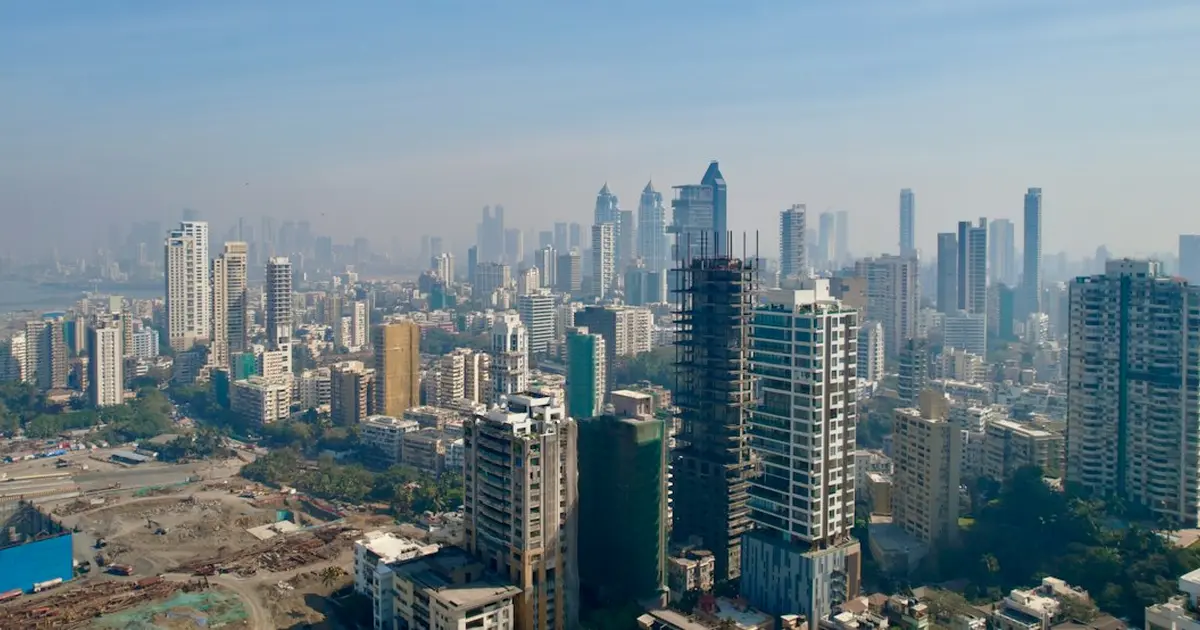
Listed REIT Payouts Jump 39% in Q2 FY27 as Office Demand Holds
Listed REIT Payouts Rise to ₹3,234 Crore in Q2 FY27
India's six listed Real Estate Investment Trusts distributed more than ₹3,234 crore to over 5.25 lakh unitholders in the second quarter of FY27. The Indian REITs Association released the figures in a statement from Mumbai on Thursday, 19 November 2026. The total is about 39% higher than the ₹2,331 crore paid out in Q2 FY26, a gain of roughly ₹903 crore year on year.
The comparison needs a caveat. Q2 FY26 had five listed trusts, and Bagmane Prime Office REIT was added in Q2 FY27. Part of the rise therefore comes from a larger group paying out, not from every trust paying more per unit. Unitholder numbers have climbed from about 2.55 lakh in Q2 FY25 to over 3.30 lakh a year later, and now past 5.25 lakh. Gross assets under management across the sector exceed ₹3.30 lakh crore, combined market capitalisation was over ₹2.09 lakh crore as of 17 November 2026, and cumulative distributions since inception are above ₹38,000 crore. Together the six trusts manage more than 215 million sq ft of Grade A office and retail space.
What This Means If You're Buying
This news concerns office and retail REITs, not apartments in a housing society. A REIT payout total is not a home price signal. The income comes from leased offices and malls, so the figures show that large commercial tenants are still paying rent and occupancy is holding up. They do not show that flat prices in Pune, Bengaluru or Gurugram will rise or fall.
There is an indirect link worth tracking. Office leasing drives white-collar hiring around business districts, and new jobs create housing demand in nearby residential areas. Bengaluru's Outer Ring Road and the Secondary Business District, where Bagmane's portfolio of about 20.3 million sq ft sits, are good examples of corridors where office expansion has tended to lift housing demand within a practical commute. Buyers near such corridors should watch the job pipeline and transport links rather than REIT dividends.
For investors, the amount received depends on the units held and the distribution each REIT declares. Listed REITs are a different asset from buying a flat. Payouts vary from quarter to quarter, and a higher sector total does not mean every trust raised its own payout.
Synergy Infracon's Take
We read this as a sign of a maturing market rather than a short-term trade. Since the sector's early trusts listed in 2014, it has distributed more than ₹38,000 crore in total, and the investor base has now grown past 5 lakh unitholders. That points to a deeper pool of money backing Indian commercial property, and the demand story behind it, led by Global Capability Centres and front-office enterprises, looks credible to us.
Where we are more cautious is the headline growth rate. A 39% jump sounds dramatic, but the sector added a sixth trust, and the year-on-year figure includes that addition. The number that matters for an investor is payout per unit at each trust, along with net operating income and occupancy. The aggregate alone cannot answer that question, and we would not let a sector total drive a decision on a specific housing purchase.
What We'd Advise Right Now
- Do not change a home purchase plan because of this news. A sector-wide REIT payout tells you very little about residential prices in your target locality.
- If you are weighing commercial real estate as an income asset, compare distribution per unit, net operating income, occupancy, leasing activity and debt levels for each trust separately rather than relying on the combined total.
- If you are buying a home near a business district, check the employment pipeline, road and metro links and recent rental data for that micro-market before committing.
- Note that SEBI requires REITs to distribute at least 90 per cent of their net distributable cash flows. That adds regularity to payouts, but it does not fix the amount any individual unitholder receives.
- Speak with our sales team before you commit. We can walk you through a locality-level comparison and explain the practical difference between owning a flat and holding REIT units.
Related Projects We Cover
- Outer Ring Road, Bengaluru: a major office corridor where a large share of Bagmane Prime Office REIT's portfolio is concentrated, and where housing demand is closely tied to nearby employment.
- Secondary Business District (SBD City), Bengaluru: another office micro-market within the same REIT portfolio, useful for comparing commute-led residential demand.
- Hinjewadi, Pune: a large IT and office cluster where residential demand has generally followed office absorption, making it a useful benchmark for buyers comparing employment-led locations.
Locations covered
Cities
Localities
Related News
 News
Embassy Developments Takes Full Control of Embassy Columbia and Serene Amara
Embassy Developments buys out the remaining 50% stake in Embassy Columbia, owner of Serene Amara in Devanahalli, Bengaluru. Possession by 31 December 2026.
 Investment
Puravankara Guarantees Rs 300 Crore for Subsidiary's Debt Issue
Puravankara guarantees Rs 300 crore of subsidiary Prudential Housing's NCDs, disclosed 19 Nov 2026. The filing has no direct bearing on delivery or.
 News
Prestige Forms Two Worli LLPs to Speed Up Its Mumbai Project Pipeline
Prestige Estates sets up two wholly owned Worli LLPs for Mumbai real estate, approved 18 November 2026. What it signals for Worli buyers and investors.
 News
Signatureglobal Adds 10 Acres in Sohna for Future Gurugram Projects
Signatureglobal signs two collaboration agreements for 10 acres in Sohna, Gurugram, adding about 0.86 million sq ft of developable area to its land bank.