
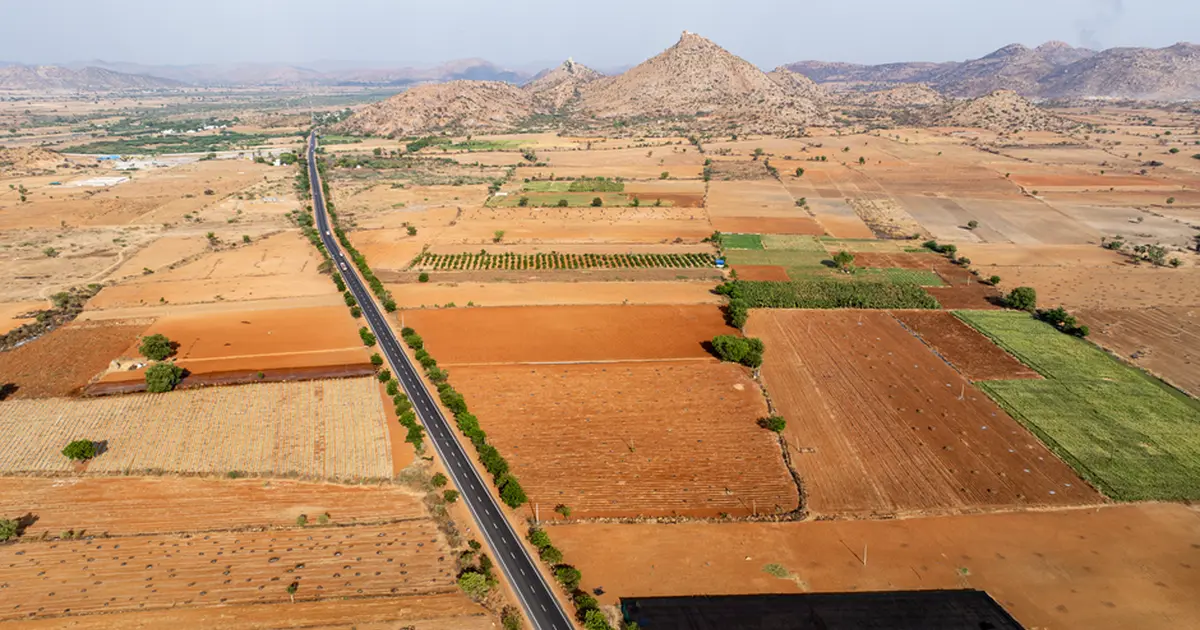
Amaravati CRDA Plot Buyer's Guide 2026: Thullur, Rayapudi And Velagapudi Prices, LPS Plot Risks And Should You Buy Now?
Amaravati Plots in 2026: Who This Guide Is For
If you are looking at a plot in the Amaravati capital region, especially around Thullur, Rayapudi or Velagapudi, this guide is for you. It is written by the Synergy Infracon sales team, a RERA-registered channel partner that advises homebuyers and investors and does not build or own any project. We explain how Amaravati's land structure works, why the Land Pooling Scheme (LPS) matters for every plot decision, what the risks are, and how to decide whether buying now makes sense for your goals.
Amaravati is a long-running capital project, so plot prices here move with government announcements, funding news and infrastructure progress more than they move with ordinary housing demand. That makes it a market where careful checking pays off.
How Amaravati's Land Structure Shapes Every Plot
The capital region was built on land pooling. Under the LPS launched in 2015, farmers in the surrounding villages gave up roughly 33,000 acres to the Capital Region Development Authority (CRDA). In return, they received developed plots within the capital area, along with annual assured returns and pension support for landless families. Much of the land now sold in the region traces back to this arrangement, which is why the plot you are considering may have a different history from a plot in a standard layout.
For a buyer, this means three things. First, you need to know whether the plot is an LPS allotment, a plot from a later CRDA layout, or private land sold in the region. Second, the chain of title can have more links than usual. Third, the rules on transfer, registration and use can differ depending on which category the plot belongs to. Ask the seller to show you the allotment or layout documents before anything else.
Thullur, Rayapudi and Velagapudi: How the Three Areas Compare
Each of these three areas serves a different buyer, and their price behaviour is not identical.
- Velagapudi sits closest to the established institutional and government core of the capital. It tends to draw buyers who want a plot near offices, institutions and the main road network, and it usually carries a premium over outlying villages.
- Thullur is positioned as a growth corridor. Buyers here are often betting on road and public infrastructure reaching the area, so price movement follows project announcements closely.
- Rayapudi appeals to buyers who want a larger plot for a lower entry ticket. The trade-off is that connectivity and nearby amenities are still developing, so you should plan for a longer wait before the area feels fully settled.
As per current market data, plot prices across the capital region vary widely even within one village, depending on road frontage, plot size, title clarity and distance from the main arterial roads. Treat any single average figure with caution. Always compare the specific plot against recent registered sale values in the same village, and ask your channel partner to pull that comparison for you.
Why the LPS Plot Carries Extra Risk
LPS plots offer real advantages, but they also carry risks that a standard residential plot does not. Be honest with yourself about these before you pay any token amount.
- Stage of development: Many plots are sold while the surrounding roads, drainage, power and water lines are still being built. Your plot's value depends on that work finishing on schedule.
- Construction pause history: Capital works slowed considerably after 2019 and restarted only later. A buyer who purchased in that period faced long gaps with little visible activity. Expect that funding and policy changes can slow progress again.
- Title and allotment chain: Plots that have passed through several hands need a clean chain of documents. Check each transfer, and confirm that the allotment has been formally recorded with the authority.
- Legal disputes: Land in the capital region has been the subject of various court matters over the years. Ask for a title search and a written confirmation from a qualified advocate that the plot is free of encumbrances.
- Flood and river exposure: Parts of the Krishna river belt flood in heavy monsoon years. Check the plot's elevation and the drainage plan for the layout before you commit.
Plot Buyer Checklist: Documents and Site Checks
Before paying a booking amount, work through these checks. A seller or channel partner who is comfortable with your questions will welcome them.
- Ask for the original allotment letter or CRDA layout approval, and verify the plot number against the approved layout plan.
- Obtain an encumbrance certificate covering at least the last 13 to 30 years, and confirm the name on it matches the seller.
- Confirm the plot's use classification and whether construction approval is allowed on it.
- Walk the plot yourself and note the road access width, the nearest paved road, and whether drainage channels are in place.
- Check the distance to the nearest school, hospital and bus or rail link, and time the journey at peak hour.
- Request written payment terms, with each instalment tied to a documented milestone rather than a verbal promise.
- Have a registered advocate review every document before you sign the sale agreement.
Should You Buy Now? A Practical Decision Table
Whether buying now suits you depends on your time horizon, your tolerance for delay and how much you can verify. The table below sets out the main factors.
| Factor | What favours buying | What argues for waiting |
|---|---|---|
| Time horizon | You can hold for five years or more | You need liquidity within two to three years |
| Title | Clean chain, approved layout, allotment recorded | Gaps in documents or unclear allotment status |
| Infrastructure | Roads and utilities visibly under construction near your plot | No firm timeline for the access road or utilities |
| Price check | Asking price in line with recent registered values in the same village | Asking price well above nearby registered sales |
| Purpose | Building a home for your own use over time | Relying on a quick resale gain |
In our view, buying now works best for a buyer who plans to hold the plot long term, can wait out construction delays without financial strain, and has completed every document check above. It is a weaker choice for anyone who needs a fast exit or who cannot verify the title properly.
Locality Context: Why the Capital Region Still Draws Buyers
The capital region is one of the few places in Andhra Pradesh where long-range planning on this scale is underway at once. Its appeal rests on its role as the state's administrative centre, its position between Vijayawada and Guntur, and the planned road and rail links that will tie it to the wider state network. Buyers who value that long-range potential tend to accept slower early returns in exchange for an area with a defined purpose.
The trade-off is that the capital region's residential market is still maturing. Schools, hospitals and retail are expanding, but a buyer who needs these today should check what exists within a short drive of the specific plot rather than relying on the master plan.
Frequently Asked Questions
Are Amaravati plots a good investment in 2026?
Amaravati plots suit buyers with a long holding period and a tolerance for slow progress. Returns depend on the specific plot, its title strength, the road and utility work near it, and how the capital's development continues. Compare the asking price with recent registered sales in the same village before you decide, and do not rely on general claims about growth.
What is the LPS plot risk I should check first?
The first check is the allotment and title chain. Confirm that the plot is recorded under the Land Pooling Scheme or a CRDA layout, that every transfer is documented, and that the encumbrance certificate is clear. Then check how far the access road and utilities have progressed near the plot.
How do I compare prices between Thullur, Rayapudi and Velagapudi?
Compare plots within the same village first, then across villages. Look at road frontage, plot size, distance to main roads and title clarity. Velagapudi generally sits closest to the established core, Thullur is a growth corridor tied to infrastructure announcements, and Rayapudi offers larger plots at a lower entry point but with a longer development horizon.
Can I build a house immediately after buying a plot?
Construction permission depends on the plot's use classification, the approved layout and the building rules that apply. Confirm the plot's status and get written approval guidance from the authority before you plan any construction budget.
Should I use a home loan to buy an Amaravati plot?
Plot loans are typically stricter than home loans for built property, and lenders look closely at title and location. Speak with your bank early, share the title documents, and check the loan terms against the payment schedule of the seller. Do not commit to an instalment plan you cannot meet if construction is delayed.
How Synergy Infracon Helps You Act on This
Our RERA-registered channel-partner team helps you turn this guide into a decision. We shortlist plots by your budget and goal, whether that is long-term holding, a future home or a mid-term exit. We obtain verified cost sheets at the same developer price so you are comparing like with like. We arrange site visits so you can see road access, drainage and neighbouring development in person, and we support you through paperwork, home-loan discussions and handover to possession. If you would like a plot checked before you commit, reach out to our sales team and we will walk the documents with you.
Conclusion
Amaravati plots can suit patient buyers who value long-range planning in a capital region. The LPS history, the construction pauses and the title complexity are real and should shape your decision. Buy only after you have verified the allotment, the encumbrance record and the access and utility progress near the plot, and only if your holding period matches the pace of development. A careful, documented purchase is the surest way to protect your money here.
Related Guides

Stamp Duty And Registration Charges In Madhya Pradesh 2026: Complete Buyer's Guide For Bhopal And Indore Properties
Stamp duty, registration fee, GST and tax benefits for buying property in Bhopal and Indore in 2026. Expert analysis with cost examples and a buyer.

Bhopal Vs Indore For Property Investment In 2026: Which Madhya Pradesh City Offers Better Returns?
Bhopal vs Indore for property investment in 2026: prices, rental yields, jobs, infrastructure and risks compared, with expert analysis from Synergy.

Bhubaneswar Property Buyer's Guide 2026: NH-16 Corridor, Patia And Khandagiri Prices, Appreciation Claims Versus Reality And Best Localities To Buy
Bhubaneswar property guide 2026: NH-16 corridor, Patia and Khandagiri compared, appreciation claims tested, top localities to shortlist. Expert analysis.
Vikhroli Vs Ghatkopar West Mumbai: Which Eastern Suburb Offers Better Value For Homebuyers In 2026?
Vikhroli vs Ghatkopar West compared on commute, metro links, schools, hospitals and buyer value for 2026. Expert analysis from Synergy Infracon's sales.